
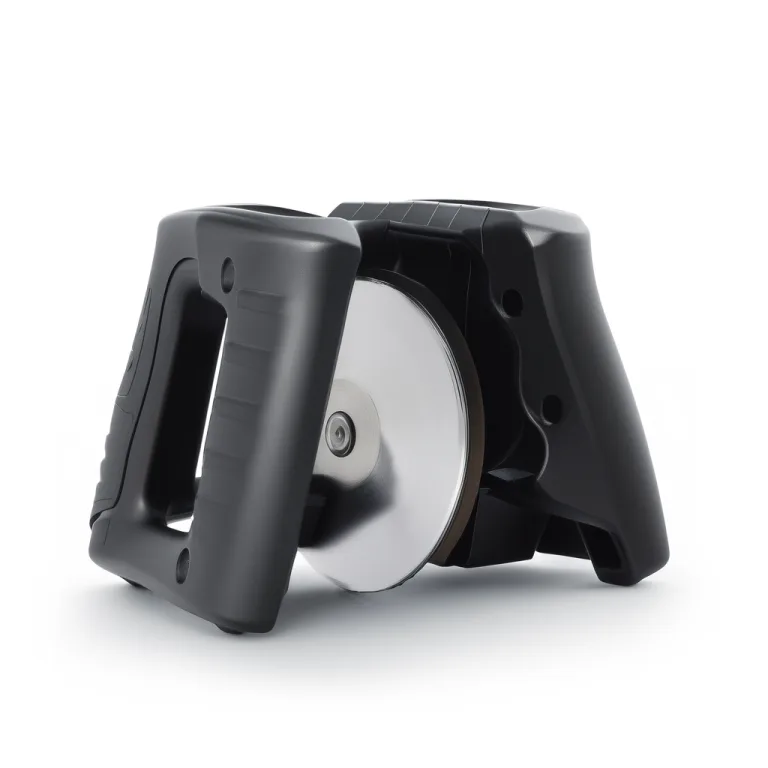
Composite Ply Cutter
Composite Ply Cutter for industrial applications.
About Composite Ply Cutter
Composite Ply Cutter for industrial applications.
| Domain | carbon |
|---|
Who Works With Composite Ply Cutter?
9 engineering roles are connected to Composite Ply Cutter based on verified research evidence.
Safety Officer
Quality Inspector
Quality Inspector is a widely recognized professional role in manufacturing and industrial engineering, responsible for verifying conformance to specifications and standards. In the context of ceramic ball mills, this role performs quality checks on components (e.g., ceramic liners, grinding media, structural integrity) and final assemblies. The term is generic—not product-specific—and aligns with ISO 9001 and ASQ-defined roles.
Non-Destructive Testing Technician
NDT Technician is a widely recognized professional role in industrial engineering, especially in composite manufacturing where inspection of ply integrity, bond quality, and defect detection (e.g., delamination, porosity) is critical. Though the product is a Composite Ply Cutter (a fabrication tool), NDT Technicians may inspect cut plies, layup assemblies, or final parts produced using such equipment — aligning with INSPECT and TEST relationships. 'NDT' is not product-specific; it's a standardized discipline (ASNT, ISO 9712). The mention of 'knowledge of NDT basics' in evidence confirms functional relevance.
CNC Operator
CNC Operator is a widely recognized, standardized industrial role responsible for operating CNC-controlled machinery — in this context, the Composite Ply Cutter, which is a CNC-based system for cutting carbon composite plies. The evidence explicitly emphasizes CNC operation, confirming direct functional engagement with the product. While 'Composite Ply Cutter Operator' would be product-specific, 'CNC Operator' is the canonical, domain-agnostic title reflecting the core skill and responsibility.
Composite Technician
Layup Technician is a recognized role in composite manufacturing, specifically responsible for placing prepreg plies with precision during composite part fabrication. While 'layup' refers to a process step, 'Layup Technician' is an established job title in aerospace, wind energy, and industrial composites sectors. The Composite Ply Cutter directly supports this role by enabling accurate ply cutting — a prerequisite for high-fidelity layup. The technician operates the cutter, inspects cut ply quality, and troubleshoots layup deviations traceable to cutting accuracy.
Materials Handler
Materials Handler is a widely recognized occupational role in industrial and manufacturing settings, responsible for moving, storing, and controlling materials — directly relevant to the Composite Ply Cutter's operational context where precise handling of carbon composite ply materials is critical. The evidence explicitly links the role to 'material handling' in the product context, supporting its functional relationship to operating and inspecting material feed/positioning subsystems of the cutter.
Tooling Engineer
Tooling Engineer is a well-established professional role in manufacturing and composites engineering, responsible for designing, validating, and optimizing tooling (e.g., cutting fixtures, nesting templates, layup tools) used in automated composite fabrication — directly relevant to the Composite Ply Cutter's integration, nesting optimization, and industrial deployment. The evidence explicitly references collaboration 'with engineering on tooling and nesting optimization', confirming functional involvement with the product.
Composite Manufacturing Technician
While 'Composite Ply Cutter' appears product- or task-specific, it denotes a recognized occupational role in aerospace and advanced composites manufacturing — distinct from generic machine operators due to domain-specific knowledge of carbon fiber handling, ply orientation, nesting, CNC-controlled cutting systems, and compliance with AS9100/ISO standards. Industry job postings (Indeed) confirm its use as a formal job title; however, the canonical professional role is best generalized to 'Composite Manufacturing Technician', which encompasses ply cutting, layup, and quality verification responsibilities. It is not merely an action ('cutting plies') but a defined technical occupation requiring certification, material science awareness, and process documentation skills.
Manufacturing Engineer
‘Battery Manufacturing Engineer – Cell Stacking Process’ denotes a specialized engineering role focused on the design, validation, and support of battery cell stacking processes — directly relevant to the Battery Cell Stacking Machine. While ‘Battery Manufacturing Engineer’ is not a standalone ABET- or IEEE-standardized title, it is a widely recognized industry-specific variant of Manufacturing Engineer (as evidenced by usage in Energy Storage Association contexts). The hyphenated modifier ‘Cell Stacking Process’ indicates process-specific focus, not a distinct profession; thus canonical_role is generalized to ‘Manufacturing Engineer’, with specialization capturing the domain and process. This role engages with the machine across its lifecycle: designing integration requirements, specifying process parameters, commissioning line integration, troubleshooting stack defects, and supporting maintenance protocols.