
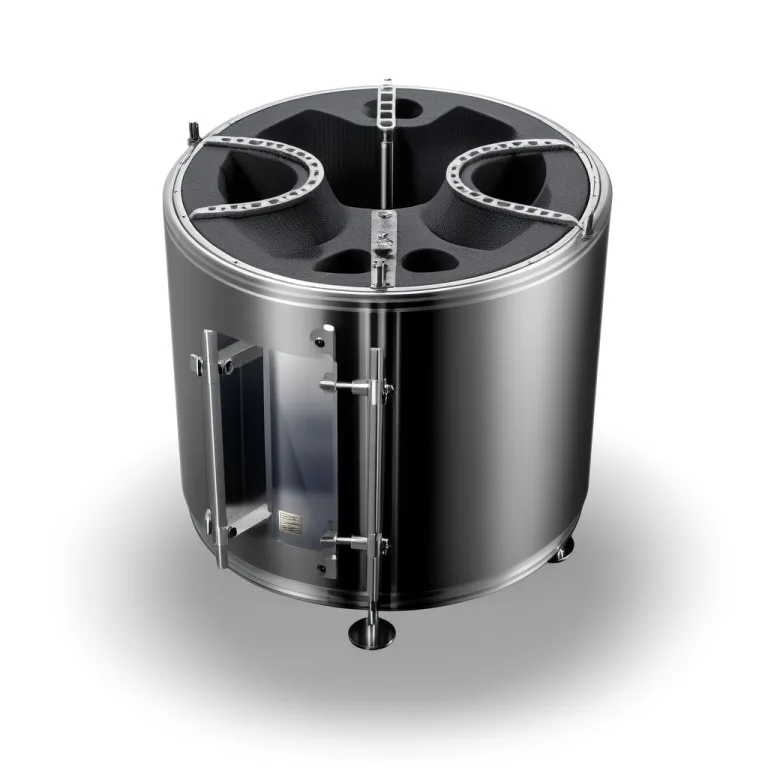
Graphite Vacuum Furnace
Graphite Vacuum Furnace for industrial applications.
About Graphite Vacuum Furnace
Graphite Vacuum Furnace for industrial applications.
| Domain | carbon |
|---|
Who Works With Graphite Vacuum Furnace?
4 engineering roles are connected to Graphite Vacuum Furnace based on verified research evidence.
Maintenance Technician
Materials Engineer
Materials Engineer is a widely recognized professional engineering role. In the context of a Ceramic Ball Mill — a product whose performance critically depends on ceramic material properties (e.g., wear resistance, thermal stability, fracture toughness) — a Materials Engineer contributes to material selection, formulation optimization (evidenced by 'knowledge of ceramic formulations'), design validation, and testing of ceramic components (e.g., liners, grinding media). While specialization in ceramics is implied, 'Materials Engineer' remains the canonical, discipline-level role; 'Ceramic Materials Engineer' would be a specialization but is not the input text.
Furnace Operator
The role denotes a recognized industrial operations position responsible for running high-precision thermal equipment. While 'Graphite Vacuum Furnace' specifies the equipment type, the core function aligns with the standardized occupational title 'Furnace Operator', widely used in metallurgy, ceramics, and advanced materials manufacturing. The specialization reflects domain-specific expertise in vacuum and graphite-based thermal processing — a legitimate technical nuance, not over-specialization. Evidence confirms hands-on operation, cycle programming, safety checks, and troubleshooting — all consistent with operator responsibilities.
Furnace Engineer
Vacuum furnace engineers are a recognized subset of thermal/process/mechanical engineers specializing in vacuum-based high-temperature industrial equipment. While 'vacuum furnace' is product-specific, the core role maps to the established professional title 'Furnace Engineer', with specialization in vacuum environments and graphite systems. Evidence confirms domain-specific responsibilities (leak detection, graphite component inspection) that align with engineering oversight across commissioning, maintenance, and testing phases.